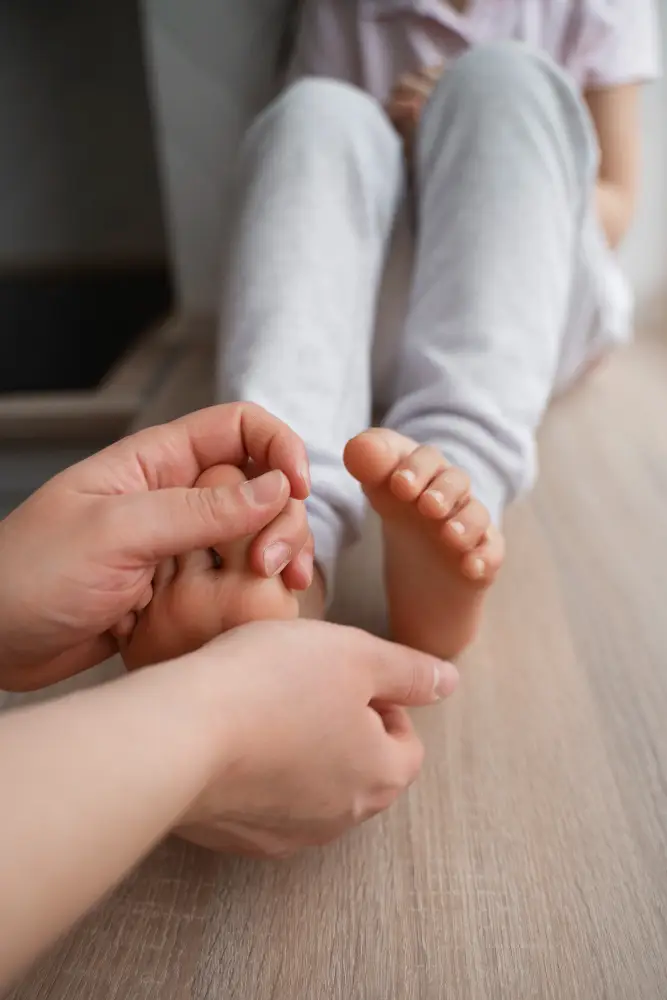

Paediatric assessments
Children of all ages with conditions such as skew foot, intoeing, flat feet, heel pain, growing pains, and other associated foot problems can be effectively assessed and treated in our clinic.
When determining the management of a young patient, three key factors guide the treatment plan: the child’s age, the presence or absence of pain, and the presence and severity of any biomechanical abnormalities.
Paediatric podiatry assessments focus on the development, structure and function of children’s feet and lower limbs. As children grow, their feet and walking patterns change, and an assessment can help identify whether development is progressing as expected or if there are factors that may require management.
During the assessment, the podiatrist will review your child’s medical and developmental history and assess their posture, foot structure and walking pattern. This may include observing standing, walking and running, as well as assessing joint mobility, muscle strength and overall lower limb alignment.
- Common areas we assess include:
- Foot posture and arch development
- In-toeing or out-toeing when walking
- Flat feet or excessive pronation
- Heel or arch pain (including conditions such as growing pains or heel pain related to activity)
- Toe walking or altered gait patterns
- Lower limb alignment, including knees and hips
- Footwear fit and suitability for growing feet
Following the assessment, management will depend on the individual needs of the child. This may include education and reassurance, footwear advice, strengthening or stretching exercises, activity modification, or orthotic therapy where appropriate. Early assessment and management can help support healthy foot development, improve comfort and function, and reduce the risk of ongoing problems as children grow.