
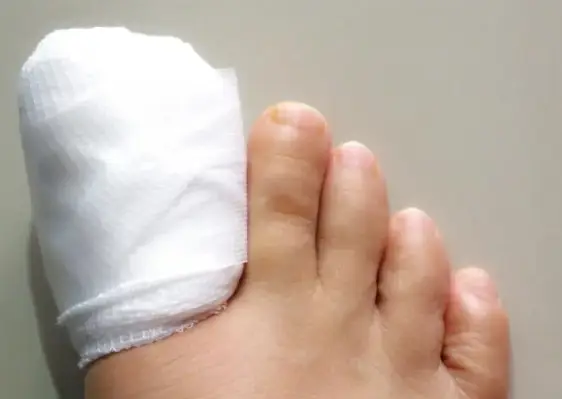
Nail surgery
Nail surgery is a minor procedure commonly performed by podiatrists to treat persistent or painful ingrown toenails. It is typically recommended when conservative treatments, such as nail care, footwear modification or infection management, have not successfully resolved the problem.
- Pre-procedure assessment
Before considering surgery, the nail and surrounding tissue are carefully evaluated. This includes evaluating the nail shape, the severity and recurrence of the ingrown nail, the presence of infection or granulation tissue, and any contributing factors such as nail trauma, footwear pressure, or underlying nail deformity. The podiatrist will also review your medical history and circulation to ensure the procedure is safe and appropriate.
- Common procedure: Partial nail avulsion with chemical matrixectomy
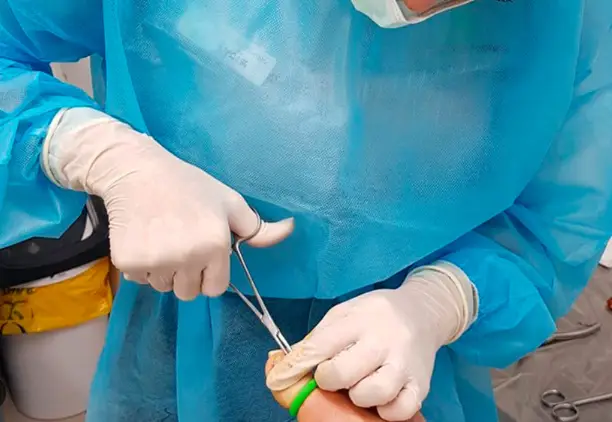
The most common procedure performed is a partial nail avulsion with chemical matrixectomy, where the affected edge of the nail is removed and a chemical agent (commonly phenol) is applied to the nail matrix to prevent that portion of the nail from regrowing. Evidence from podiatry and dermatological research shows that partial nail avulsion combined with phenolization has high success rates and low recurrence when performed correctly, making it one of the most widely recommended treatments for recurrent ingrown toenails.
- How the procedure is performed
- Aftercare and follow-up
- Referral for complex cases